
15 Questions to Ask a Web Designer Before You Sign
The 15 questions to ask a web designer before you sign: portfolio, process, SEO, ownership, and pricing. Spot a real agency from a page-builder shop fast.
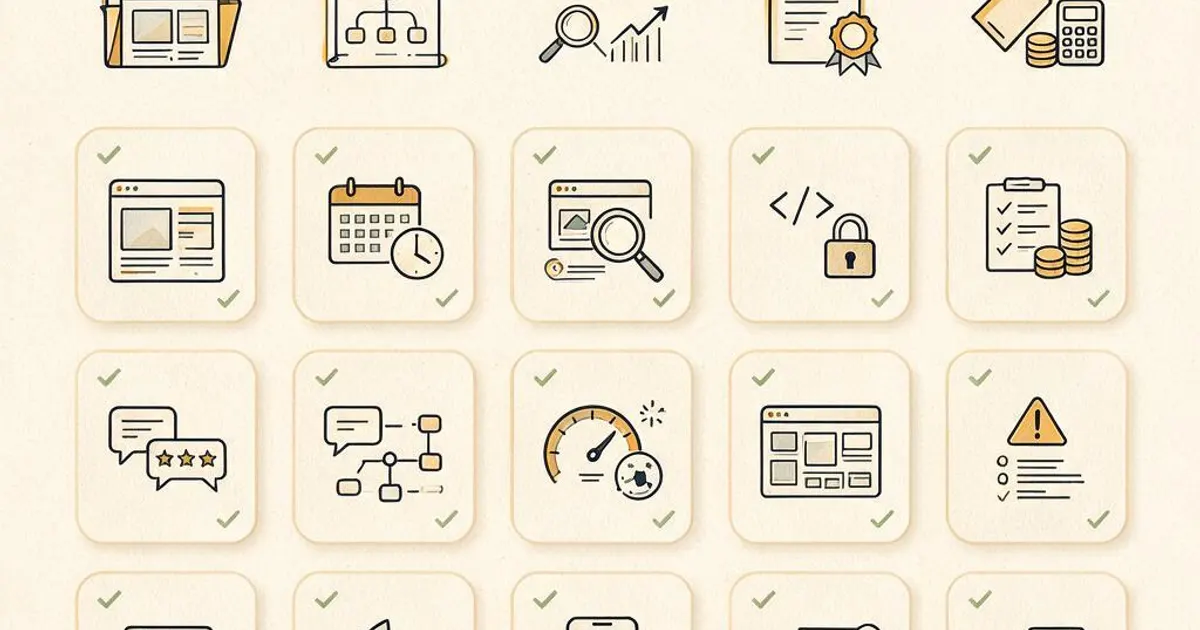
- The right questions to ask a web designer cover five areas: portfolio and experience, process and timeline, SEO and speed, ownership and platform, and pricing and support.
- The most revealing question is who owns the finished site, files, and accounts. If the answer isn't you, walk away.
- Always ask about SEO and site speed. A designer who treats them as extras is building a good-looking site that performs poorly.
- The tell isn't the portfolio, it's how plainly they answer hard questions. Real professionals give specifics, while page-builder shops deflect.
Why the questions you ask a web designer matter
The questions you ask a web designer before you sign are how you tell a real professional from a page-builder shop, because both can show you a nice portfolio, but only one answers the hard questions straight. A website is a big spend and a long commitment, so the discovery call is where you protect yourself.
Most people choose a designer on the strength of a portfolio and a gut feel, then discover the problems later: they can't edit the site, they don't own it, it ranks nowhere, or the "affordable" quote balloons with add-ons. Every one of those outcomes is predictable from the answers to a few pointed questions. The 15 below are grouped into five themes, and you don't need to fire them like an interrogation. Work them into a normal conversation and pay attention less to the polish of each answer than to whether it's specific and confident or vague and defensive.
It helps to know why this matters so much for a website specifically. Unlike most purchases, a site is something you'll live with for years and keep paying to run, and the mistakes are expensive to undo. Rebuilding a site you can't edit, migrating off a platform you were locked into, or recovering rankings a careless launch destroyed all cost far more than getting it right the first time. The questions below are cheap insurance against exactly those outcomes, and any designer worth your money will welcome them rather than bristle.
Portfolio and experience
Start by confirming they've done work like yours and can point to results, not just screenshots. A pretty portfolio proves they can make things look good, not that those sites actually work.
- Can I see live sites you've built, not just mockups? Live sites reveal speed, mobile behavior, and whether the design survived real content.
- Have you worked with businesses in my industry or size? Relevant experience means fewer expensive lessons on your dime.
- Can you share results, like traffic or leads, from a past site? A designer who tracks outcomes builds for outcomes, not just looks.
Then quietly test one of their past sites yourself: open it on your phone and see how fast it loads. If a designer's own showcased work is slow or awkward on mobile, that's a fair preview of how yours will turn out, no matter what they promise on the call.
Process and timeline
A designer worth hiring can explain, step by step, how your project goes from kickoff to launch and what they need from you along the way. Vagueness here is the most common source of blown timelines.
- What's your process from start to launch? A clear answer signals a repeatable system, not a make-it-up-as-we-go project.
- What's the realistic timeline, and what causes delays? Honest designers name content and approvals as the usual holdups, because they are.
- How many rounds of revisions are included? This prevents the awkward "that's an extra charge" surprise halfway through.
SEO and performance
Ask directly how they handle SEO and site speed, because a beautiful site nobody can find is a brochure, not a marketing asset. This is where a lot of cheap builds quietly fail.
- How do you handle on-page SEO and site speed? These should be built in, not sold as an upsell on a real build.
- Is the site mobile-first and tested on real devices? More than half your visitors are on phones, so this isn't optional.
- If you're replacing my site, how do you protect my rankings? The right answer mentions 301 redirects and keeping content that ranks.
If a designer treats SEO as someone else's job or charges extra for fast loading and clean structure, they're handing you a site that looks good and underperforms. On a site built right, SEO and design aren't separate purchases, which is exactly how we approach every web design project. For the deeper version of the ranking-protection question, our website redesign SEO checklist shows what a good answer looks like in practice.
Ownership and platform
Confirm that you own the site, the files, and every account, and that you can edit it yourself afterward. This is the single most important theme, and the one dishonest shops dodge.
- Who owns the website, files, and accounts when we're done? The only acceptable answer is you, fully, with no strings.
- What platform do you build on, and can I edit it myself? A site you can't update without paying the designer is a permanent dependency.
- Will I be locked into your hosting or proprietary system? Lock-in turns a one-time project into a bill you can never stop paying.
Some shops keep clients trapped on their own platform or accounts so leaving means losing the whole site. Building on a standard platform like WordPress, which you fully own and control, is the way to avoid that, and it's a big part of why we and many owners favor WordPress over closed builders. If you'd rather hand the whole thing to someone accountable, our hire a WordPress designer page lays out how that works.
Want a straight answer to all 15?
Free 45-minute call. Ask us anything on this list, and we'll answer plainly, including who owns the site (you) and how we protect your SEO. No pitch.
Pricing and support
Nail down exactly what the price includes and what happens after launch, so there are no surprises on either side. Pricing questions are where a defined scope beats a vague hourly promise.
- Is this a fixed-scope quote or hourly? A defined scope tells you exactly what you get, while open-ended hourly can balloon.
- What's included, and what costs extra? Get content, revisions, and SEO basics in writing so nothing hides in the gaps.
- What support do you offer after launch, and at what cost? Sites need updates and fixes, so know the ongoing arrangement up front.
For a professional small business site, expect roughly $2,500 to $8,000 depending on scope, with support quoted separately. The number matters less than whether it maps to a clear scope, and our WordPress website cost guide breaks down every line item so you can sanity-check any quote you're handed.
How to read the answers
Judge the answers on specificity and confidence, not polish, because the tell isn't what a designer says, it's how plainly they say it. Two designers can give the same answer, and only one leaves you reassured.
Real professionals answer hard questions in detail and without hesitation, because they've done it many times and have nothing to hide. When you hear vague reassurances, deflection, or a sudden "that costs extra" on a basic like site speed or ownership, treat it as the warning it is. You're not looking for perfect answers to every one of the 15, you're looking for honesty and command of the specifics. A designer who says "I don't handle that, but here's who does" is often more trustworthy than one who claims to do everything and explains none of it. Trust the pattern across all five themes more than any single answer, and you'll rarely pick wrong. One last practical tip: take brief notes during the call and compare designers side by side afterward, because the differences that matter often only show up when you line the answers up against each other. The designer who felt charming in the moment may be the one who dodged ownership and SEO, while the one who seemed plain gave you a straight answer on every theme. On paper, the right choice is usually obvious.
Frequently asked questions about hiring a web designer
What questions should I ask a web designer before hiring?
Ask about five areas: their portfolio and relevant experience, their process and timeline, how they handle SEO and site speed, who owns the site and what platform they build on, and their pricing and ongoing support. The single most revealing questions are who owns the finished site and files, whether you can edit it yourself afterward, and how they protect or build SEO. Vague or defensive answers to those three usually tell you more than a polished portfolio does. Good designers answer them plainly because they've got nothing to hide.
What is the most important question to ask a web designer?
The most important question is who owns the website, the files, and the accounts when the project is done. If the answer is anything other than you, walk away. Some shops keep sites hostage on their own platform or accounts so you can't leave without losing everything, which turns a one-time project into a permanent dependency. A straight answer that you own the domain, hosting, site files, and all accounts is the baseline for working with anyone, and it separates a real partner from a lock-in trap.
How do I know if a web designer is any good?
Look past the portfolio at how they answer hard questions. A strong designer explains their process clearly, talks openly about SEO and site speed, confirms you own everything, quotes a defined scope rather than a vague hourly promise, and can point to results, not just pretty screenshots. Check that their own past sites load fast and rank, since a designer who ignores speed on their own work will ignore it on yours. The tell is confidence with specifics: real professionals answer in detail, page-builder shops deflect.
Should I ask a web designer about SEO?
Yes, always, because a beautiful site that no one can find is a brochure, not a marketing asset. Ask how they handle on-page SEO, site speed, mobile experience, and structured data, and if you're replacing an existing site, ask specifically how they protect your current rankings during the switch. A designer who treats SEO as someone else's job, or charges extra for the basics like fast loading and clean structure, is building you a site that looks good and performs poorly. SEO and design aren't separate purchases on a site built right.
How much should I pay a web designer?
For a professional small business website, expect roughly $2,500 to $8,000 depending on page count, custom design, and whether content and SEO are included, with ongoing support quoted separately. What matters more than the number is that the price maps to a defined scope, so you know exactly what you get, rather than an open-ended hourly arrangement that can balloon. Be wary of quotes far below this range: they usually mean a template you're paying someone to fill in, which rarely solves the deeper problems that sent you looking for a designer.
Upcoming Brand | WordPress web design for Maryland businesses and US-wide remote clients
We build fast, owned-by-you WordPress sites for businesses across Baltimore, Annapolis, Frederick, Rockville, and the US, delivered remotely via Zoom and async updates. Ask us all 15 questions on your discovery call, and you'll get a straight answer to every one. Book a free discovery call or email hello@upcomingbrand.com.
Ready to hire a designer who answers straight?
WordPress web design from an agency that gives you full ownership, real speed, and SEO built in, with a fixed scope you approve up front.